Showing posts with label Superman. Show all posts

Monday, May 2, 2022

A look at the various cuts of Superman: The Movie

I recently watched all the officially released versions of Superman: The Movie as well as “The Final Cut” fan-edit. I came away realizing that the Special Edition is the best version to watch.
The theatrical cut is the tightest version of the film. Honestly, with the Special Edition available since 2001, I rarely watch the theatrical version anymore. It was a nice revisit as this is the cut I grew up with. I understand it’s the preferred version for many fans but those added scenes in the Special Edition have spoiled me and now I just feel like something's missing from this cut.
The “Special Edition” acts as Richard Donner's Director's Cut and, it’s my favorite version to watch. Donner himself has mentioned that this is his preferred edition of the film as well. It features an additional 8 minutes of footage, including new Krypton footage, added dialogue, and the now infamous trap sequences (machine guns, flamethrowers, and a freezing chamber) before Superman enters Luthor’s lair. For me, the added footage enhances the film because it gives us more scenes of Christopher Reeve without being superfluous, and the color grading is enhanced as well. The pacing remains tight and we get more of the movie.
The “Extended Edition”, released on Blu-ray, is the 1981 television cut. This 3-hour-and-8-minute version of the film was the original cut of the film in late 1977 before being re-edited for theatrical release. It first aired cut in two parts as a 2-night event on the ABC network. This version is more commonly called the "Salkind International TV Cut." This cut adds some amazing additional footage of Superman flying that should have been included in the Special Edition, in my opinion. Other than that, it’s a slog to get through. So much unnecessary footage slows the pacing, including whole scenes of added dialogue, and some of the added footage needs to be further color corrected to match the rest of the remastered film. It’s great to watch at least once, or maybe twice, to satisfy curiosity and see what was left out of the theatrical cut, but ultimately, it's not the ideal version. Most of the added scenes don’t really add anything to the film.
The “Final Cut” is a fan-edit by Kathryn Ross, a freelance film editor. This cut of the film runs 2 hours, 56 minutes and incorporates most of the Extended Cut footage while also digitally enhancing or altering many of the effects shots and adding some neat flourishes like added planetary effects in the opening credits. I like this edit much better than the Extended Cut as it is much tighter and the enhanced visual effects add a lot to their respective scenes. Changes in color grading enhance the colors of some scenes and the audio mix has been altered in places. This altered cut even incorporates the opening Daily Planet scene from Superman II: The Donner Cut as a Post-Credit scene. For anyone who may be new to fan edits, there are many different edits of this film. Kathryn Ross' edit is probably the best fan edit of the film. 

Because Superman: The Movie is the best superhero movie ever made, and the grandaddy of all comic book movies, all of these versions offer a fun experience. Each cut adds something that enhances the original theatrical version. The weakest of these remains the “Extended Cut” because of its pacing issues. The “Final Cut” is gorgeous, an admirable attempt at restoring and honoring the film. Donner's “Director's Cut,” a.k.a. the Special Edition, remains the best version. If someone wants to watch this movie, I’d recommend they see each of these cuts, but for my money, the Special Edition is the definitive version.

Wednesday, October 20, 2021

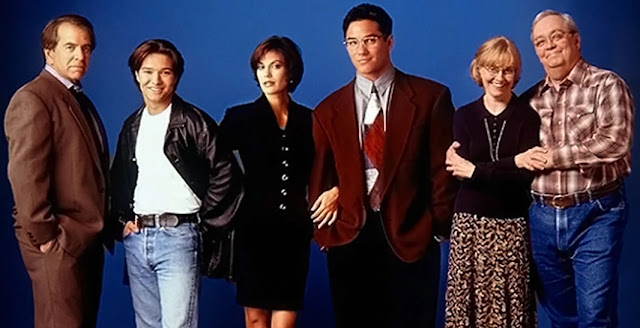
Lois and Clark (1993-1997) - Review and Analysis

Debuting in 1993, Lois and Clark: The New Adventures of Superman was a television show that attempted to further the Superman legend by injecting romance into its super heroics. It ran for four seasons on ABC and followed the immediate Post-Crisis comic book continuity established by John Byrne et al. This was the first incarnation where Clark was the real identity and Superman was just a heroic persona.

Lois and Clark is a very entertaining show. The first season is the best, largely because of the dynamics between John Shea's Lex Luthor and Dean Cain's Superman. The plots of the show vary greatly. Action heavy stories give way to suspense. There's occasional cheesy comedy to balance out the romantic drama between the title characters, but it's the romance that really drives the show. The best episodes, for me, are when Superman's humanity is explored. The chemistry between Teri Hatcher and Dean Cain really draws you in and keeps you invested. The magic of the show really comes down to the cast.

Dean Cain is the best live-action Clark Kent ever. His Clark is the most fleshed out of any live-action version. Every time he is on screen he just exudes charm... Cain's Superman however, while very serviceable for a romantic adventure show, left a lot to be desired because there was very little to distinguish Cain's Superman from his Clark. For my money, the best Superman still is Christopher Reeve.

Teri Hatcher delivers the definitive portrayal of Lois Lane. She defines every one of Lois' traits perfectly... the tough, brash, no-nonsense reporter. She's also very charming and sexy. If any of the other Lois' compare to her, the one that springs to my mind is Dana Delaney from Superman: The Animated Series in the 90's. Teri just nails Lois Lane perfectly.

Lane Smith as Perry White is just a complete character. Lane's Perry is very likable, funny, charming, and a genuinely good person who cares about his reporters. He's got the Elvis obsession that comes from the modern Perry from the comics. While I like John Hamilton (from the 1950's Superman show) and Jackie Cooper (the Reeve movies) in their roles, they don't get the rounded character of Perry as much as Lane Smith does. To be fair though, Lane Smith had four seasons to develop Perry into a real character.

Then there's Jimmy Olsen... Michael Landes did a good job with what he was offered but didnt get enough time to shine. He was good in the role but had he been given more time to develop, he probably would have been great. When I think of Jimmy Olsen, it's Justin Whalin that I think of. Whalin gave us the Daily Planet photographer as I'd always wanted to see him... curious, mischievous, a modern teenager.

Eddie Jones and Kay Kalin were great as The Kents. They seemed like the kind of parents (or grandparents) that you'd wanna have... just two very genuine and caring people... not too bland and old fashioned either, which was nice; a modern update on Ma and Pa Kent.

And now we come to my favorite part of the show: John Shea. His Lex Luthor was absolutely the most vile character and the perfect Lex Luthor. Arrogant, charismatic,  narcissistic, and evil. His hatred for Superman is fiery. There were moments in that first season where he scared me. John Shea is the best Lex Luthor in live-action. He gave an absolutely stunning performance. No other Luthor compares in my mind, though Clancy Brown's Lex is the best animated version.

Tracy Scoggins as Cat Grant was interesting. Rather than giving fans the character from the books, they rewrote her as the office gossip. Tracy was great in the role, even if it was a different character. They axed her after the first season and she deserved better. They could have given her a credible exit, at the very least.

I also liked the character of Jack from Season 1 and would have preferred if he'd stuck around for the rest of the series. He was a cool addition to the cast.

Beyond the cast is the writing and production design. Lois and Clark features pretty conventional writing for a 1990's superhero TV series that turned into a romantic comedy/drama. The plots are fun and try to juggle human drama, light comedy, and comic book/sci-fi themes. Even if the budget doesn't always allow for the greatest effects work, the show holds up. I also think the production design was stellar. Dean Cain's Superman costume looked great on screen and every setting, from the Kent farm to the Daily Planet, even Luthor's penthouse, was spectacular. 

Lois and Clark is a charming show that leaves a romantic mark on the Superman mythos. It's dated by today's TV standards but is a fine addition to the Superman franchise. I personally find it more enjoyable than shows like Smallville and Superman and Lois because I'm not interested in a teenaged Clark or Superman with children. I'd recommend this show to any Superman fan or anyone who wants to see where Superman was at in the 1990's.

Sunday, April 4, 2021

Superman Smashes The Klan! - A Comic Review and Analysis of Superman Vs Hate Groups


Superman Smashes the Klan! And he's been doing so for about 75 years. The Man of Steel first encountered the KKK in his very own radio show in the 1940's. It seems that every generation or so, DC Comics publishes a story dedicated to Superman fighting either the Ku Klux Klan directly or some group that was indirectly inspired by what the Klan represents. In that way, Superman has never completely lost that sense of truth and justice that Jerry Siegel and Joe Shuster gave to their character. He has always remained something of a social crusader.


It began in 1946. The Anti Defamation League had infiltrated the KKK. The ADL contacted the Superman radio show and suggested that they feature a story where the titular hero faces the Klan. Over 16 episodes, from June to July of '46, "Clan of the Fiery Cross" aired and Superman took his war to the fascist menace.   


And as for the comic? Well, this story is a new take on the saga that is the "Clan of the Fiery Cross." In the 3-part miniseries, written by Gene Luen Yang with art by Gurihiru, Superman is in his younger days. He helps an immigrant family, battles racists, and finds himself grappling with life as an alien outsider. Like the radio show from which it drew inspiration, the story takes place in 1946.

The story seems to take a lot of inspiration, not only from the radio show (even The Atom Man appears), it is visually inspired, at least in part, by the Fleischer cartoons. It's a brisk story with appropriately cartoony art, that seems to offset and balance the seriousness of the subject matter. This is a great ode to Superman's Golden Age. It's also very topical, considering the times we live in. What I like most about this story is that it squarely defines the KKK and their sympathizers as the enemy. Superman has some of that hutzpah, here, that he had in his earliest days. The Champion of the Oppressed has returned and... if there was ever a time for him... the time is now! Thanks, Superman, for fighting fascism and taking it to these bad guys! Recommended for all ages. This is a masterpiece and should be read again and again.

Saturday, October 3, 2020

In Defense of Superman!


Despite being the first superhero and one of the most well-known fictional creations of all time, the Man of Steel is sometimes seen as a stodgy, overpowered, boring character. From the late 1990's to very recently (and perhaps even now), some superhero and comic book fans  have had an unfavorable opinion of Superman.

This manifests itself in many ways. The sales of Superman comic books have ebbed and flowed with a large decline happening since the New 52 relaunch in 2011. Arguments on the interwebs, these days, usually favor heroes like Batman, Spider-man or Deadpool to the "Big Blue Boy Scout." He's fallen out of fashion again, as he had many times since his debut in 1938. It happens. Societal values change over time and, for many fans, he hasn't evolved enough to remain as relatable as other characters have. 

The biggest indication that Superman has lost popularity among some is shown in 2 flawed and misinformed ideas: 

1) There are very few good Superman stories.

The only real way to refute this argument is to recommend a bunch of amazing Superman stories. Here are my top 20 Superman stories to convince his naysayers that "good Superman stories" are in abundance. These stories span comics, film and cartoons.

-- Whatever Happened to the Man of Tomorrow (a farewell to the Bronze Age Superman by Alan Moore and Curt Swan)

-- Superman: The Man of Steel (the 1986 six-issue miniseries by John Byrne that retells the origin of Superman)

-- Peace on Earth by Paul Dini and Alex Ross (Superman tries to dedicate himself to solving one of humanity's greatest problems in just 1 day: ending world hunger) 

-- Superman #1 (from 1939, this is an expanded version of the debut story from Action Comics #1)

-- Superman Vs The Flash (from Superman #199, this showcases the race between Superman and The Flash. Written by Jim Shooter with art by Curt Swan)

-- For All Seasons by Jeph Loeb and Tim Sale (the story of how Smallville and Ma and Pa Kent shaped Superman. A retelling of his origin)

-- For The Man Who Has Everything by Alan Moore and Dave Gibbons (A Superman birthday story in which an alien entity shows Superman an alternate reality. Culminates in a battle with the warlord, Mongul. Guest stars Batman, Robin and Wonder Woman)

-- Kryptonite Nevermore by Denny O'neil and Curt Swan (a saga from 1971 where Kryptonite disappears and Superman is depowered)

-- Superman: Brainiac (a modern retelling of the first meeting between Superman and Brainiac by Geoff Johns and Gary Frank)

-- All Star Superman (the modern love letter to the Silver Age by Grant Morrison)

-- Superman: Exile by various writers/artists (a classic saga where Superman exiles himself from Earth, compelled by remorse and guilt over his greatest personal failure)

-- Dark Knight Over Metropolis (a story where Batman and Superman meet and come to an important understanding about their differences) 

-- The Death and Return of Superman Saga by various writers/artists (the classic 1990's Saga)

-- The Wedding and Beyond by various writers/artists (the mid-90's event where Superman and Lois Lane finally got married)

-- Last Son (a five-issue comic book story arc written by Geoff Johns and Richard Donner, with pencils by Adam Kubert. The story introduces the original character, Christopher Kent and adapts the classic Superman film villains, General Zod (His appearance modeled after the actor, Terence Stamp), Ursa and Non into the regular DC Universe continuity)

-- Superman-Shazam: First Thunder (a modern retelling of the first meeting between Superman and Captain Marvel [Shazam], written by Judd Winick with art by Joshua Middleton) 

-- Lex Luthor: Man of Steel (a five-issue monthly limited series written by Brian Azzarello and illustrated by Lee Bermejo, which explores Lex Luthor as the protagonist)

-- Superman: The Movie (from 1978, this classic film is often regarded as the greatest superhero movie of all time)

-- Superman (aka The Mad Scientist, this is Superman's first ever cartoon from Fleischer Studios in 1941)

-- The Last Son of Krypton ("The Last Son of Krypton" is the three-part series premiere of Superman: The Animated Series. It depicts the origin of Superman, his coming to Metropolis, and is a great springboard to the animated series)

2) The second argument is that Superman is a hard character to write because he's too moral or too powerful.

This is not an objective argument. Superman is supposed to be moral. He's a symbol of what we as humans should aspire to. His stories should showcase his power but also demonstrate that he is different from the grimness of characters like Batman. He doesn't have the problematic life of Peter Parker either. His best stories offer a sense of hope and optimism about the world and ourselves but also delve into his complex and fantastic mythology. 

In closing, I'd like to argue that Superman is an exciting and broad character with a compelling mythos. If you're not a fan of what he represents, fair enough. But to many, myself included, he remains one of the greatest comic book characters of all time. Some even see him as the greatest superhero. If you have ever found yourself on the side of the "Superman is boring" argument, I would encourage you to dig a little deeper. You just might open up a whole new world of mythology to explore. 


Friday, May 3, 2019

Superman: The Animated Series (1996-2000)

* As I did with the FleischerSuperman cartoons and Batman: The Animated Series, I want to take a serious and analytical look at the Superman cartoon of the 1990’s.

       Superman: The Animated Series began life as a tie-in idea for the planned but never produced Tim Burton/Nicholas Cage Superman movie reboot. Once that film project started languishing, Warner Bros. handed the reigns of the cartoon series over to the producers and creative team from Batman. And why not? Batman: TAS remains the most successful superhero show of all time.

       Initially, Bruce Timm and company, while being excited at the prospect of working on the biggest superhero of all time, didn’t really know how to handle Superman. They weren’t sure if they wanted to go retro with Superman, ala Fleischer, or just follow the BTAS example. Ultimately, after many discussions and character sketches, the team decided on a retro-futuristic style for Superman. 

       The designs for the characters and their world were streamlined and more cartoony than even BTAS had been. The look was bright and optimistic, while certain episodes still harkened back to the pulp action/sci-fi tone of the best Superman comics.

       This series leaned heavily on the New Gods/Fourth World comics of Jack Kirby, introducing Darkseid and his planet Apokolips as major players. This was done because Bruce Timm believed that most of Superman’s enemies weren’t powerful enough to be any credible threat. Also as a result of this, as John Byrne had done in his comics, the producers felt it would be best to depower Superman from his all powerful Silver Age levels. This was a wise decision indeed. It’s much easier to appreciate and relate to a Superman who is less powerful than one who can blow out a star like a birthday candle.

       The other thing that this show also pulled from the Byrne comics was keeping the Kents alive. John Byrne had recognized the source of drama and the emotional anchorage that Jonathon and Martha Kent would add to Superman stories. This was an ingenious insight that the producers also accepted. It helped to make Clark more human and provide more of a background for him in Smallville.

       The score, once again the brainchild of Shirley Walker, is wonderful. The main theme is very heroic and optimistic. It feels like a Superman theme. Overall, this is a more modern soundtrack than the BTAS score. It’s less operatic, less sprawling and perhaps simpler. It helps the show feel much more like a science-fiction/fantasy cartoon than a dramatic superhero series. It would be impossible to hold this score up to the John Williams Superman theme. The two are incomparable, but both are brilliant.

       Many fans hold up this animated version of Superman as the best animated adaptation. While I agree that it's a fun show, I would have to give that honor to the Fleischer cartoons. While the animation for this series is technically near perfect for the clean, cartoony style that they went with, the stories themselves are hit and miss for me. Of the fifty-four episodes produced over three seasons, I would argue only about thirty-five of them, give or take a few, hit their mark. That said, this show still offers some of the best Superman media, outside of the comics.

       I realize there’s no such thing as a perfect show, and while some of the earliest episodes are truly brilliant, there are quite a few duds. This series simply lacks the pathos and more mature nature of the early BTAS episodes. The creators of this show also didn’t seem to take Superman as sincerely as they did Batman either. 

       There’s something about this show that just screams: missed opportunity. I can’t really put my finger on why, as much as I love this series, it feels like something’s lacking. Maybe it’s the fact that BTAS set such a high bar. Maybe, and this is just speculation, the producers ultimately didn’t know what to do with a Superman cartoon? Maybe it would have been better if the character designs and animation style were less cartoony? I don’t know. Even though I don't think this Superman show offers everything it could have, relying too much on either humor or Jack Kirby's 4th World, it still is a must for Superman fans.

       I still like a lot of what they did. Highlights for me include:

SEASON ONE
Episodes 1–3: The Last Son of Krypton (the pilot)
Episode 7: The Way of All Flesh
Episode 13: Two’s A Crowd

SEASON TWO
Episode 3: The Prometheon
Episode 4: Speed Demons
Episode 6: Target
Episode 9: Action Figures
Episode 12: Brave New Metropolis
Episode 16-18: World’s Finest (3 part Batman crossover)
Episode 22: The Late Mr. Kent

SEASON THREE
Episode 2: Knight Time
Episode 8: Superman’s Pal
Episode 9: A Fish Story
Episode 10: Unity
The Finale: LEGACY


Tuesday, January 8, 2019

My Top Ten Comic Book/Superhero Movies


The following is a ranking of, what I consider to be, the best comic book movies ever made. There are many great superhero films and as a result this list was hard to compile.

I rate these movies on 3 criteria:

1) Faithfulness: Does the film boil the source material or character(s) down to its essence, hit the major points of the character or at least give a decent idea to the viewer of what the mythos is all about?

2) Entertainment Value: Is the film entertaining? Does it leave the viewer with a sense of wonder, amusement or enjoyment?

3) Story: Does the film tell a compelling story? Does the story fit the character?
_____________________________________________________


10) Hellboy (2004)

Although director Guillermo Del Toro took some liberties with the movie version of Hellboy, this film tells a compelling story. The film is well paced and gives a succinct origin for the hero, hitting many of the major beats of the first Hellboy story, Seed of Destruction. For many people, myself included, this was what got them into the Hellboy comics.
_____________________________________________________


9) Road To Perdition (2002)

Although not a superhero movie, this film is based on one of the greatest graphic novels ever written. Famed crime fiction writer, Max Allan Collins wrote a fast paced, suspenseful tale that was turned into one of the greatest modern noir films. Tom Hanks was brilliantly cast as the lead, Michael Sullivan. This should be held up as an example that great comic book movies don’t have to feature long underwear characters.
_____________________________________________________


8) Batman Begins (2005)

While this is probably the best Batman movie ever made on a filmic level, it forsakes much of the fantasy of a superhero in favor of grounded realism. The film is a master class in dramatic storytelling, taking its main cue from the story, Batman Year One. It even manages to tell a great origin story, playing on the fears of a post-9/11 world. However, it misses the escapism that a great superhero story can provide. This is a great Batman movie. The rest of the Dark Knight trilogy, while well-made films, are not good adaptations and explicate too much.
_____________________________________________________


7) Spider-man 2 (2004)

This movie is the most impressive statement about Spider-man ever put to screen. It boils everything about the classic Stan Lee/Steve Ditko creation down to its essence and features, arguably, the best villain in Spider-man’s rogues gallery, Doctor Octopus. It’s a movie with great action, a fun story, and is probably as close as classic Spidey will ever come to being straight off the page.
_____________________________________________________


6) The Avengers (2012)

This film is probably the best superhero team movie ever made. It is the blueprint for how to film a team of superheroes. It builds off of many of the solo hero movies that gave birth to the Marvel Cinematic Universe and manages to be mostly faithful to the origin of the team. Impressive visual effects and a credible villain make this film an entertaining spectacle.
_____________________________________________________


5) Wonder Woman (2017)

Before seeing this I had not been very impressed with DC’s attempt at a cinematic universe for their heroes. Man of Steel and Batman Vs Superman: Dawn of Justice were not that great. Wonder Woman changed my mind. It is one of the best superhero films to ever come out of DC and one of the best superhero movies of the last few years. Gal Gadot is impressive in her role as the Amazon Princess but the story is what really blew me away. There is faithfulness to the origin and it works well as a period film.
_____________________________________________________


4) The Rocketeer (1991)

The Rocketeer is the perfect example of a pulpy action adventure film. It tells an engaging story, features plenty of action, has heart and is one of the most faithful adaptations of a graphic novel ever put to screen. Billy Campbell is perfectly cast as The Rocketeer and Timothy Dalton expertly plays the villainous Neville Sinclair. Jennifer Connelly isn’t too bad either. This is one of the greatest adventure films ever made.
_____________________________________________________


3) Teenage Mutant Ninja Turtles (1990)

Teenage Mutant Ninja Turtles nails the tone of its source material better than any superhero movie ever made. It perfectly captures the gritty, fun and absurd flavor of the original comic book. It adds a few details from the wildly popular cartoon show of the late 80’s and melds everything that was ever good about the TMNT into a masterpiece. Its compelling story is constructed out of bits and pieces of the first dozen issues of the original comic series. It’s probably the greatest TMNT movie that could ever be made.

_____________________________________________________


2) Batman (1989)

This film is more style over substance and doesn’t really feature much of a plot, but its importance in the pantheon of superhero movies cannot be denied. I rank this so highly as a superhero movie almost purely out of childhood nostalgia. It takes liberties with the mythos and is very indicative of the time it was created in. That being said, every time I watch it, I am impressed and awed by the set pieces and the mood. The film is such an entertaining spectacle, and gives me such a feeling of joy, that it will forever be one of my favorites. It’s also the purest expression, in live action anyway, of the Batman from the 70’s and 80’s, my favorite eras in the bat books. For more on this movie, go here.
_____________________________________________________


1) Superman: The Movie (1978)

In 1978, when Superman was released, director Richard Donner delivered a blueprint for all future superhero movies to follow. This is the gold standard for all comic book films. Christopher Reeve was perfectly cast as Superman. The story was an epic three-act fantasy that also served as a compelling origin. The effects were like nothing ever seen at the time and are especially impressive because they were all practical effects. It perfectly captures the essence of Superman’s character and is an affectionate tribute to one of pop-culture’s most important icons.
_____________________________________________________
 
HONORABLE MENTIONS:

Batman: Mask of the Phantasm (1993)

Captain America: The First Avenger (2011)

The Dark Knight (2008)

X2: X-men United (2003)

Black Panther (2018)

Iron Man 2 (2010)

The Avengers: Age of Ultron (2015)

Monday, December 31, 2018

John Byrne's Man of Steel: A New Beginning For Superman


Writer/artist John Byrne seems more like a comics fan first and a comics professional second with regard to his respect of character and mythos. He goes into every superhero project attempting to be as faithful to the original concept as possible (I wish more comics pros took this approach). He has been quoted as asking the question of “How much can I keep?” with regards to reboots. He seems to care about the characters he works on and tries to tell stories that respect them rather than shoehorn them into stories that might not fit that character, as so many modern creators do.


He has been responsible (or partly responsible) for many of the greatest runs in superhero comics. His Fantastic Four run is probably the greatest statement on the FF ever, after the foundation that was laid by Stan Lee and Jack Kirby. His X-men stories with Chris Claremont are the definitive X-men stories. His very brief Hulk run is well remembered by some fans also.

His first real involvement with DC Comics on a major level, however, came in the wake of the Crisis on Infinite Earths event. With input by Marv Wolfman, John Byrne was put in charge of the hard reboot and reinterpretation of the Superman mythos in 1986. Byrne was chosen after many other comic book pros, including Carey Bates, Frank Miller and Steve Gerber, all pitched concepts for a new Superman continuity.

Byrne’s ideas for Superman were inspired by every version of the character that he had been exposed to. He drew from four main sources: the original Golden Age Superman stories by Jerry Siegel and Joe Shuster, the Fleischer Superman cartoons, the Adventures of Superman TV series of the 1950s and the first Christopher Reeve Superman film from 1978.


Superman’s new beginning debuted in the six-issue mini-series The Man of Steel (which ran biweekly from October to December in 1986). Byrne retold Superman’s origin and the series established the new Superman as once again the “Last Son of Krypton.” In this more streamlined continuity, all of the barnacles that had attached themselves to the Superman legend (Supergirl, Krypto the Superdog, Superman as Superboy and the other Kryptonians that had appeared over the years) were swept away.

As a back-to-basics approach, this series was the perfect jumping on point for new readers. You literally didn’t have to know anything about Superman and could pick up Man of Steel from issue one and become a fan. Byrne depowered Superman from his Silver Age levels to something more in line with how the character appeared in the Golden Age.


The biggest changes to the mythos were in characterization. Byrne’s Clark Kent was more assertive and confident, reflecting the George Reeves portrayal from the Adventures of Superman TV series. Clark Kent was now the real person and Superman was a disguise used for superheroics. Lois Lane was reimagined as a dedicated career woman of the 1980s, a strong and independent feminist. Thanks to writer Marv Wolfman, Lex Luthor received the most dramatic overhaul. He was no longer the mad scientist who used super-armor and robbed banks to build inventions that might destroy the Man of Steel. This new version of Luthor was a capitalist business magnate, one of the richest men in the world. Byrne has mentioned that this Luthor was inspired in part by Donald Trump. Ma and Pa Kent were also kept alive in this continuity. Byrne realized that the Kents could be an asset to the Superman mythos and moral and emotional support for Clark.  

Byrne also took the opportunity to retell the first meeting bewtween Superman and Batman. He put the two heroes at odds, creating an uneasy alliance. Frank Miller would also use this approach in his groundbreaking Dark Knight Returns story.

Krypton was also reinvented completely. Gone was the Flash Gordon-inspired sci-fi planet as conceived by Joe Shuster. This new Krypton almost resembled an amalgamation of the planet Tatooine from Star Wars and the cold ice planet from the 1978 Superman movie. Byrne created an emotionally dead, sterile desert planet with mile-high towers. It’s people were a civilization dedicated solely to scientific pursuits. 

In September of 1986, a month after Man of Steel debuted, this new continuity essentially replaced all of Superman’s ongoing series. The Superman comic (Vol. 1 that began in 1939) was rechristened Adventures of Superman. This made way for the second volume of the Superman title, published as Superman #1 (Vol. 2). Byrne wrote and drew both Superman Vol. 2 and Action Comics (which was still being published as Vol. 1), while Marv Wolfman wrote Adventures of Superman with pencils and co-plotting credit by Jerry Ordway.

For the first year, to the credit of Byrne, Wolfman and Ordway, the books fit together incredibly well. This is especially impressive because they were only loosely related to each other as far as story was concerned. As Byrne continued his run, familiar characters from the old Superman mythos began to reappear, albeit reimagined, including the wonderful reintroduction of Metallo. This was alongside new characters and Superman even shared adventures with old DC Universe staples such as the Metal Men and Jack Kirby’s Demon character.

DC soon began three separate mini-series that built upon the mythos that Byrne was trying to establish. World of Krypton, World of Smallville, and World of Metropolis were all written by Byrne while the art varied. Each of these books ran four issues and expanded upon the characters of each locale. World of Metropolis was my favorite of these series because it gave more background to the character of Lois Lane and showed how the city reacted to Superman.

In 1987 Byrne and Ordway inherited Adventures of Superman after Marv Wolfman left. The various Superman books rolled on impressively with each new issue feeling like fresh, exciting new territory.


The beginning of 1988 saw the release of the prestige-format graphic novel: Superman: The Earth Stealers. Written by Byrne with art by Curt Swan and Jerry Ordway, this story is still memorable. It provides a great statement about environmentalism and the need to protect our planet.


Byrne’s work on Superman ended shortly thereafter, but his finale and one of the better stories to come out of this run was the Supergirl Saga. It really is a master class in comic book storytelling. Starting in Superman Vol. 2 #21, a new Supergirl was introduced. At first, this apparently ignored the “Last Son of Krypton” edict that had helped to define the reboot. This new Supergirl was discovered to be a “biological matrix” or alien shape-shifter from a “pocket universe.” This pocket universe was a way to shoehorn in explanations of how aspects from the old continuity might coexist with the new continuity. This universe brought other Kryptonians to the new canon, culminating in one of the most controversial aspects of Byrne’s run: the execution of three Kryptonian criminals via Kryptonite radiation by the Man of Steel. Because this was Byrne’s final statement before he left, the impact was huge.

Byrne’s run gave way to impressive work on the character done by Roger Stern in another title, Man of Tomorrow. Because of Byrne’s foundation, future writers took the Superman franchise in creative and bold directions for years afterward. All the work from 1986 to the time when Superman died at the hands of Doomsday in the Death and Return Saga served to humanize Superman and make him more relatable. He was less a distant alien super being and more a man with great power who genuinely cared about people.

It is amazing to think about, now, how much work Mr. Byrne was able to complete and just how much he was able to accomplish in such a short time. He was involved in writing, plotting or art on 68 of the 82 issues from this period.  Overall, this is a career defining run for Byrne and a cohesive work. It is as important to the history of Superman as the work of Siegel and Shuster, the Fleischer cartoons, the George Reeves series or the 1978 movie. This is the best Superman for many fans, myself included, and deservedly so.

If you want to get into modern Superman, need an introduction to the character or just want to read fun comic books, this will not disappoint. The series has been reprinted in 9 trade paperbacks. Run, don’t walk, to your nearest comic book shop and buy/order these. 

Monday, December 17, 2018

The Fleischer Superman Cartoons - Review and Analysis

Fleischer Studios, the greatest animation house in the Golden Age of cartoons (behind Disney of course), later known as Famous Studios after being merged with Paramount Pictures, turned out seventeen of the greatest superhero cartoons ever made. They starred Superman, the first—and some would say greatest—comic book superhero. 

The Fleischer brothers, Max and Dave, had previously been responsible for Betty Boop and Popeye cartoons. When Paramount, recognizing the success of Superman on radio and in comics, approached the brothers about doing this series, they were hesitant. The legend goes that the Fleischers threw an astronomical number at Paramount for production of these shorts (just over a million dollars per episode in today’s money). The studio actually agreed and, with such a tremendous production budget, the Fleischer’s relented.

There are essentially two reasons for the greatness of this series. Firstly, the animation is stellar. It remains, to this very day, some of the best animation of all time. Secondly, they were extremely faithful to the comic books from which they came. This was admittedly easy to do, since there wasn’t yet that much continuity to draw from. Joe Shuster, Superman’s co-creator, even designed some of the model sheets. It’s interesting to note Superman’s chest shield is black with a red “S.” This is similar to the cover of Superman #1 from 1939. These cartoons played to movie theater audiences before the main feature between 1941 and 1943.

This series of animated shorts was Superman's first appearance in any film, animated or live action. In addition to these cartoons, Superman appeared in a famous radio show and two movie serials, themselves some of the best serials ever produced. These three media, along with the Superman comics that nearly ever kid in the United States read, were responsible for making Superman a household name, and later an American icon. These cartoons are also said to be the original place where Superman first gained the power of flight. Before this he could simply leap 1/8th of a mile. 

The first 9 episodes were pure Fleischer. Each was directed by Dave Fleischer and the animation is amazing. The stories are simple and formulaic. A villain, monster, or catastrophe is thwarted by Superman while Lois Lane gets herself into trouble while trying to get the story. After Superman saves the day, Lois writes of the events and Clark Kent smiles or winks at the audience, while Lois criticizes him for not being around. The last 8 episodes, produced by Famous Studios with various directors, are propaganda pieces, more concerned with the events of World War II and nationalism and can be very racist and defamatory when viewed by a modern audience.

Because they fell into the public domain in the years following their release, this series has been widely distributed on VHS and DVD in varying degrees of quality. Until Warner Bros. digitally remastered and gorgeous re-release in 2009, the most well known, and best quality, release of these cartoons was done by a company called Bosko Video on VHS and later DVD.


Voice Casting

Radio fans and budding Superman fans would have recognized Bud Collyer as Superman from the popular radio show. He had voiced Superman and his alter ego, Clark Kent, on the radio program since its start. Collyer was the first superhero actor ever to change his voice to distinguish between hero and secret identity. For Clark Kent he used a higher vocal range. When he became Superman his voice was noticably more baritone. Because of his success in the role, Collyer would continue to perform as the voice of Superman for on the radio for years to come and return decades later to the character for television cartoons in the 1960s. Collyer would find his greatest fame, during his lifetime anyway, as a gameshow host in his later life.

Joan Alexander, one of three actresses, who played Lois Lane on the radio show voiced the intrepid reporter for this series. In this series, as she would later become in the comics, Lois is headstrong, daring and fearless in her pursuit of a story, even if she falls into the role of damsel in distress. In one cartoon she is seen firing a Tommy Gun. Joan Alexander’s performance reflects this masterfully. Her vocal delivery is capable of being confident and frightened when the role calls for it.

Jackson Beck delivered two of the other major vocal performances in this series. He was the only recurring voice actor that had not initially been a part of the radio show. His biggest role in the series was as Perry White but he also provided the opening narration to all 17 cartoons. His vocal performance was so precise and his talent so tremendous that it can be a challenge to tell the narrator apart from the famed paper editor.

Jack Mercer, famous as the original voice for Popeye the Sailor, played the lead villain, the bald mad scientist in the opening short, as well as a copyboy (not meant to be Jimmy Olsen) that appeared in at least two episodes.

Every other speaking part in the series was probably a clever vocal inflection done by either Bud Collyer or Joan Alexander, though this is uncertain due to the lack of voice credit given to the actors in the series. The common practice of the day was to use two or three actors to carry multiple voice roles in any given cartoon.

The Cartoons
Superman (also known as “The Mad Scientist”)

Aired on September 26th, 1941. This is the most famous of the episodes, probably because it was the first. That scene of Clark entering the storeroom to transform to Superman and then fly out the window is one of the greatest sequences in superhero animation.
Note: This was the only short to be nominated for a 1941 Academy Award but it lost to Disney’s “Lend a Paw” cartoon featuring Mickey Mouse and Pluto.

The Mechanical Monsters

Aired on November 28, 1941. This short is often cited as the best of the series and I have to agree. The scene where Clark phones in the event to Perry before entering into a phone booth to transform into Superman then launching into the sky in pursuit of a robot is the most iconic Superman sequence of ALL TIME, in animation at least. The battle between the Man of Steel and Mechanical Monsters at the villains lair is a classic scene. This is the only short that introduces and makes use of Superman’s X-ray vision.

Billion Dollar Limited

Aired on January 9th, 1942. This third short is probably the most cartoony on a technical level, given how attention to physics and the true dynamics of movement are ignored. When the train falls from the tracks and off the cliff it moves in such an awkward way, almost as if the train is personified. Personification and awkward, unrealistic movement is a hallmark of many Fleischer cartoons. A trained eye can spot this style of movement in many of their productions. Note the villain’s car at the beginning. It is reminiscent of a Golden Age batmobile.

The Arctic Giant

Aired on February 27th, 1942. This is Superman’s first battle with a true monster, an inspiration for all prehistoric monsters to follow, including Godzilla. This is the episode where Superman can be seen leaping the most.

The Bulleteers

Aired on March 27th, 1942. This episode contains the phrase “citizens of Metropolis.” It is the first episode to mention location. It also has some of the best visuals of the entire series.

The Magnetic Telescope

Aired on April 24, 1942. This episode is first example of the Superman verses a dangerous meteor plot that has been used countless times throughout the character’s history. This plot would later resurface in the Adventures of Superman TV episode “Panic In the Sky” as well as many other Superman stories and media.

Electric Earthquake

Aired on May 15, 1942. Superman vs. the Native American scientist is interesting. The Native scientist is clearly very intelligent and his underwater lair is breathtaking. The fact that this takes place in Manhattan is odd, considering previous entries mention Metropolis, but maybe Lois and Clark just went on a trip for the story.

Volcano

Aired on July 10, 1942. Behind The Mechanical Monsters, this is probably the best episode of the series. The plot is fast paced, the action and sense of danger immediate. While "Mechanical Monsters" or the debut episode may be the most iconic, this seems to boil Superman down to his essence the most. 

Terror on the Midway

Aired on August 28, 1942. The circus setting is a great way to showcase Superman’s powers by having him face off against dangerous circus animals. Superman verses a gorilla named “Giganto” (yes, the ape's name is supposed to be Giganto though one poster labels him as "Gigantic." This encounter foreshadows (intentionally or not) his later battles in the Silver Age of comics with the giant monkey known as “Titano.”

Japoteurs

Aired on September 18, 1942. This is the first episode to be produced by Famous Studios. This is the episode that draws the most criticism for its racist depiction of the Japanese and Japanese Americans. This is also the first episode to deal in real world terms presenting a black and white view of World War II and painting the United States as the good guys. The sequence where Superman saves the diving bomber is iconic however.

Showdown

Aired on October 16, 1942. This is the simplest and most basic plot in the series, yet with heightened reality. Superman verses a gangster, a cross between Al Capone and Edward G. Robinson, is probably the purest expression of pulp this series ever attempted. The Superman imposter/hired goon is too stupid to be any real threat but the snares and traps at the gangster’s hideout are enough of a challenge for the Man of Steel to make this interesting. The Superman reveal on the roof is one of the best in the series.

Eleventh Hour

Aired on November 20, 1942. Another example of nationalism and propagandic racism, this cartoon almost could have been sanctioned by the U.S. War Department. This entry presents Superman as a government stooge, imposing his will, or the will of the U.S. government on the Japanese by sabotaging the Japanese war effort. The demonization of Japanese people is horrifying This is not one of the better episodes for this reason though it is interesting to see Clark Kent and Lois Lane as reporters abroad.

Destruction Inc.

Aired on December 25, 1942. This episode is interesting and plays on the fears of industrial sabotage of the time by gangsters, foreign enemies or spies. In many ways this is the most boring of all episodes. The plot is very pedestrian. The motivations of the saboteurs are not very clear either. This episode doesn’t have a lot to recommend it.

The Mummy Strikes

Aired on February 19, 1943. This is the most supernatural of all episodes in the series. The mummified guards that come alive and attack Lois, Dr. Wilson and Superman seem huge and imposing. They are truly hulking monsters and their white eyes always frightened me as a kid. I like that Superman saves the wrongly accused girl, Jane Hogan who was framed for the murder of Dr. Jordan. This also gives the series a sense of ancient history in that King Tush is based upon Tutankhamen, or King Tut, Pharaoh of Egypt around 1358 BC.

Jungle Drums

Aired on March 26, 1943. Despite some impressive animation, this cartoon is another example of racism and demonization, both of German and Native African people. The Nazis, in their disguise as deities, are dressed similar to the Ku Klux Klan. Even though the racism is apparent, what I really like about this one is its obvious inspiration from African art (popular in the Western art world during the first half of the 20th century), as seen in the tribal fire dance.

The Underground World

Aired on June 18, 1943. This is clearly the most science-fiction themed episode of the series. Up to now all episodes deal with highly advanced technology or implausible situations. Okay, so that dinosaur coming back to life after being an ice cube is impossible and those mummies are not very likely either, but this episode has an underground civilization of bird people who worship a statue of Professor Henderson’s father. It’s hard to get more implausible than that. There actually is an air of mystery and menace, a darkness to this that is comparable to an Indiana Jones story. Highly recommended.

Secret Agent

Aired on July 30, 1943. While this entry does contain heavy propaganda, there is something about it that I find highly enjoyable. The gorgeous blonde spy on the run from Nazi saboteurs has all the makings of a good espionage thriller. Superman battling the Nazis and helping the agent get her briefcase full of enemy plans to Washington is very compelling. This is also the only entry in this series that does not feature Lois Lane at all. The ending shots of an aerial view of Washington DC is some of the most detailed animation I have ever seen.

The Score

The musical arrangement for each of the episodes by Sammy Timberg is some of the best scoring for superhero properties ever, comparable in quality only to John Williams' own Superman theme, Danny Elfman’s 1989 Batman themes, the work done by Shirley Walker on Batman: The Animated Series, and James Horner’s score for The Rocketeer film in 1991. Sammy Timberg’s sweeping and heroic instrumentals are brisk, really serving the action and mood of these cartoons.

Final Thoughts

These cartoons have never really been surpassed in terms of superhero animation. Some of the stories are weak, particularly the WWII themed ones, but this series still passes as fun entertainment. For fans of superhero fare, and general cartoon enthusiasts, these are a treasure. The closest contender to this series would be Batman: The Animated Series, done by Bruce Timm and company at Warner Bros. Animation in the early 1990’s. Serious film critics and animation buffs consistently site these shorts as some of the best animation of all time. I rate this series 3.5 out of 4 stars. It would receive a perfect score but for the racism and propaganda of many of the final 8 episodes. I would recommend that any superhero fan, any comic book fan or even any fan of animation check these out.

Note: Also, check out anything else that the Fleischer Studios produced. Their Popeye cartoons are of course great and well remembered, their Betty Boop shorts less so, but the Fleischer Brothers turned out hundreds of unique, gorgeously fluid cartoons that are worth the attention of any serious animation fan.